
How to Remove Makeup Stains from Clothes Safely
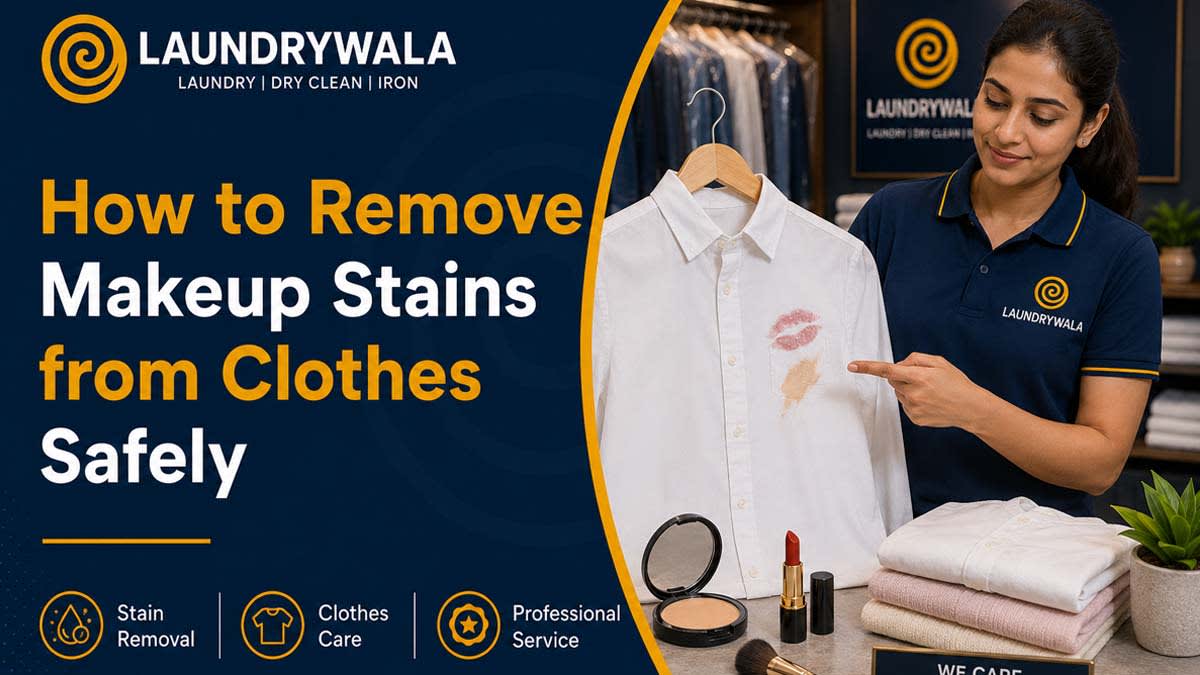
Makeup stains are common on shirts, tops, kurtas, sarees, dresses, collars, towels and pillow covers. Foundation, lipstick, kajal, mascara, compact powder and liquid makeup can leave visible marks on fabric. If these stains are handled incorrectly, they can spread, become oily or settle deeper into the cloth.
If you are wondering how to remove makeup stains from clothes safely, the first rule is simple: do not rub the stain harshly. Remove extra makeup gently, treat the stain before washing, check the care label and avoid heat until the stain is completely removed.
LaundryWala offers professional Laundry Service and Dry Cleaning Service for delicate, premium and heavily stained garments that need safe fabric care.
Why Makeup Stains Are Difficult to Remove
Makeup stains are different from normal dirt because many makeup products contain oils, waxes, pigments and long-wear ingredients. These ingredients help makeup stay on skin, but they also make stains harder to remove from clothes.
Common makeup products that stain clothes include:
- Foundation
- Lipstick
- Kajal
- Mascara
- Eyeliner
- Compact powder
- Concealer
- Blush
- Nail polish
- Hair colour
- Makeup setting spray
Some stains are oil-based, some are pigment-based and some are powder-based. That is why one cleaning method does not work for every makeup stain.
Check the Fabric Care Label First
Before treating any makeup stain, always check the care label. A cotton T-shirt, silk saree, wool blazer, linen shirt and polyester dress should not be cleaned the same way.
The FTC guide on clothing care labels explains why washing, drying, bleaching and dry-cleaning instructions are important for garment safety.
Check whether the garment says:
- Machine wash
- Hand wash
- Wash separately
- Do not bleach
- Dry clean only
- Low heat iron
- Dry in shade
If the label says dry clean only, avoid home stain experiments. Makeup stains on silk, wool, expensive ethnic wear, suits, blazers and designer dresses should be handled by professionals.
First Step: Do Not Rub the Stain
The biggest mistake people make is rubbing the makeup stain immediately. Rubbing can push the stain deeper into the fabric and spread it over a larger area.
Instead:
- Remove extra makeup gently.
- Blot the stain with a clean cloth.
- Treat from the back side of the fabric when possible.
- Use mild detergent or stain-safe method.
- Wash only after pre-treatment.
- Check the stain before drying.
The American Cleaning Institute’s stain removal guide explains why stains should be treated before drying because heat can make many stains harder to remove.
How to Remove Foundation Stains from Clothes
Foundation stains are usually oil-based or liquid-based. They are common on collars, necklines, sleeves and towels.
Steps to remove foundation stains:
- Scrape off extra foundation gently with a spoon or dull edge.
- Do not rub the stain.
- Apply mild liquid detergent on the stained area.
- Gently work it in with fingers.
- Let it sit for 10–15 minutes.
- Wash according to the care label.
- Check before drying.
For delicate fabrics, avoid strong stain removers. Foundation can spread if treated aggressively.
How to Remove Lipstick Stains from Clothes
Lipstick stains are difficult because lipstick usually contains wax, oil and strong colour pigment. Red, pink and dark lipstick stains are especially visible on white or light-coloured clothes.
Safe method:
- Blot extra lipstick gently.
- Apply mild liquid detergent.
- Work from the back of the stain if possible.
- Rinse with normal water.
- Wash according to the label.
- Do not iron before checking the stain.
Avoid using hot water at the start because it may make the stain harder to remove.
How to Remove Mascara and Eyeliner Stains
Mascara and eyeliner stains can be oily, dark and stubborn. Waterproof mascara is harder to remove because it is designed to resist water.
Steps:
- Blot the stain gently.
- Apply a small amount of mild detergent.
- Let it sit briefly.
- Rub gently with fingers, not a hard brush.
- Rinse and wash as per the care label.
If mascara or eyeliner is on silk, wool, embroidery or a designer outfit, choose professional cleaning.
How to Remove Kajal Stains from Clothes
Kajal stains are very common in Indian households, especially on dupattas, pillow covers, kids’ clothes and ethnic wear. Kajal can spread quickly if rubbed.
What to do:
- Do not rub dry kajal harshly.
- Lift extra kajal gently.
- Apply mild detergent on washable fabric.
- Rinse carefully.
- Repeat gently if needed.
For sarees, lehengas, suits and delicate fabrics, professional dry cleaning is safer.
LaundryWala’s Dry Cleaning Service can help with delicate garments where home cleaning may damage fabric, colour or embroidery.
How to Remove Compact Powder and Blush Stains
Powder makeup stains may look easy, but they can spread if you wet them too quickly. First remove the powder gently.
Steps:
- Shake off extra powder carefully.
- Use a dry soft brush to remove loose makeup.
- Blot gently if needed.
- Apply mild detergent only if the stain remains.
- Wash according to the care label.
Do not press powder stains deeper into the fabric.
How to Remove Makeup Stains from White Clothes
Makeup stains are very visible on white shirts, uniforms, T-shirts, towels and bedsheets. White clothes need careful handling because harsh bleach or scrubbing can damage fabric.
For white clothes:
- Treat the stain before washing.
- Use mild detergent first.
- Avoid random bleach use.
- Wash whites separately.
- Check the stain before drying.
- Avoid ironing stained areas.
The American Cleaning Institute’s Laundry Basics guide explains why sorting clothes and using proper wash methods matter for better cleaning.
How to Remove Makeup Stains from Delicate Clothes
Delicate clothes need extra care. Do not treat expensive or delicate garments like regular cotton clothes.
Be careful with:
- Silk sarees
- Wool coats
- Blazers
- Designer dresses
- Heavy ethnic wear
- Embroidered kurtas
- Chiffon dupattas
- Georgette sarees
- Lace fabric
- Rayon garments
If makeup stains are on delicate clothes, do not use home remedies like harsh brushing, bleach, vinegar or baking soda without proper knowledge. These can damage texture, colour and fabric strength.
For delicate garments, professional dry cleaning is usually the safer option.
Can You Use Bleach on Makeup Stains?
Bleach is not recommended for most makeup stains. It can damage fabric, fade colour, weaken threads and create yellow patches on some white garments.
Avoid bleach on:
- Coloured clothes
- Silk
- Wool
- Rayon
- Embroidery
- Printed clothes
- Designer outfits
- Clothes with logos
- Elastic fabric
- Delicate lace
Use bleach only if the garment care label and product instructions clearly allow it.
Can Dish Soap Remove Makeup Stains?
Dish soap is sometimes used for oily stains, but it is not safe for every fabric. It may help on some washable cotton garments, but it can be too strong for delicate clothes.
Use carefully only when:
- Fabric is washable
- Colour is stable
- Garment is not delicate
- Care label allows washing
- You test on a hidden area first
For expensive clothes, do not take risks. Professional laundry or dry cleaning is safer.
Common Mistakes to Avoid
Makeup stains become worse when treated incorrectly. Avoid these common mistakes:
1. Rubbing the Stain Hard
Rubbing spreads makeup and pushes pigment deeper into fabric.
2. Using Hot Water Immediately
Hot water can make some stains harder to remove.
3. Drying Before Checking
Do not dry clothes until the stain is removed. Heat can set the stain.
4. Ironing Over Stains
Ironing stained clothes can make the mark permanent.
5. Using Bleach Randomly
Bleach can damage fabric and colour.
6. Mixing Chemicals
Do not mix bleach, ammonia, vinegar or stain removers. This can be unsafe and may damage clothes.
7. Ignoring the Care Label
Every fabric has different washing and drying needs.
How to Prevent Makeup Stains on Clothes
Prevention is easier than stain removal. Small habits can protect clothes from makeup marks.
Useful tips:
- Wear clothes after makeup sets properly.
- Use a towel around shoulders while applying makeup.
- Avoid touching collars with foundation hands.
- Let setting spray dry before dressing.
- Be careful while removing clothes.
- Keep white clothes away from makeup tables.
- Wash pillow covers and towels regularly.
- Clean stains as soon as possible.
Makeup stains are easier to remove when treated early.
Makeup Stains on Towels and Pillow Covers
Towels and pillow covers often get foundation, kajal, lipstick and skincare stains. These items should be washed regularly because makeup residue can mix with sweat and body oil.
For towels and pillow covers:
- Wash separately from delicate clothes.
- Pre-treat visible stains.
- Use correct detergent quantity.
- Dry completely before storage.
- Do not leave damp towels in a closed basket.
The CDC’s information on mold and damp environments explains why moisture control and proper drying are important.
When Should You Choose Professional Laundry or Dry Cleaning?
Choose professional cleaning when the stain is on expensive, delicate or dry-clean-only garments.
Professional care is better for:
- Silk sarees
- Blazers
- Suits
- Designer dresses
- Lehengas
- Heavy ethnic wear
- Wool garments
- Embroidered clothes
- Old makeup stains
- Waterproof makeup stains
- White garments with stubborn stains
LaundryWala provides laundry, dry cleaning, steam ironing and doorstep pickup support for daily wear, office wear, ethnic wear and delicate garments.
To book service or ask for help, visit Contact LaundryWala.
FAQs about best Laundry Tips
Everything you need to know about expert fabric care, stain removal, and maintaining your garments like a pro.